🌎 What’s Happening This Week in Protect Our Planet News
Our environmental choices keep showing up in real places: along a desert border, in a mountain town shaped by wildfire, in global climate math, and across landscapes where wildlife still has a chance.
Some stories this week are warnings. One is a reminder that long-term protection can still be built.
Protection is not abstract. It lives in the decisions we make while there is still time.
🌎 United Nations report highlights significant increase in U.S. climate pollution
A new United Nations climate report identifies the United States as the only major economy where greenhouse gas emissions rose dramatically in 2025. The U.S. also tied Russia for the highest emissions per person among the world’s largest emitters.
The report links rising U.S. emissions to increased electricity demand and Trump administration policies supporting fossil fuels, including extending coal plant operations, weakening vehicle fuel-efficiency standards, and ending clean energy tax credits.
Meanwhile, global emissions remained nearly unchanged. Scientists warn that current national commitments are insufficient to prevent dangerous warming, with temperatures projected to rise approximately 2.8°C (5°F) this century under current policies. NPR
Why this matters: Climate pollution crosses borders. Rising emissions increase the risks of extreme heat, flooding, wildfires, and rising seas. The report warns that countries must accelerate emissions reductions to limit future damage. While several major economies are reducing emissions, U.S. emissions are rising, raising concerns about America’s contribution to global climate progress.
🌡️ The Big Story: A New U.N. Climate Report Says Delay Has a Price
A major new U.N. climate report says the world is set to exceed 1.5 degrees Celsius above preindustrial levels, and that the urgent task now is to limit how far and how long that overshoot lasts. The report outlines a lowest-possible overshoot pathway in which warming peaks around 1.7 to 1.8 degrees Celsius around mid-century and returns to or below 1.5 degrees by 2100.
To move onto that path, global greenhouse gas emissions would need to fall 18 percent by 2030, 45 percent by 2035, and 69 percent by 2040, all relative to 2025 levels. New York Times
Why this matters: This is not a declaration that action no longer counts. It is a warning that delay makes every next step harder, costlier, and more dangerous.
🏜️ A Big Bend Border Wall Fight Heads to the Supreme Court
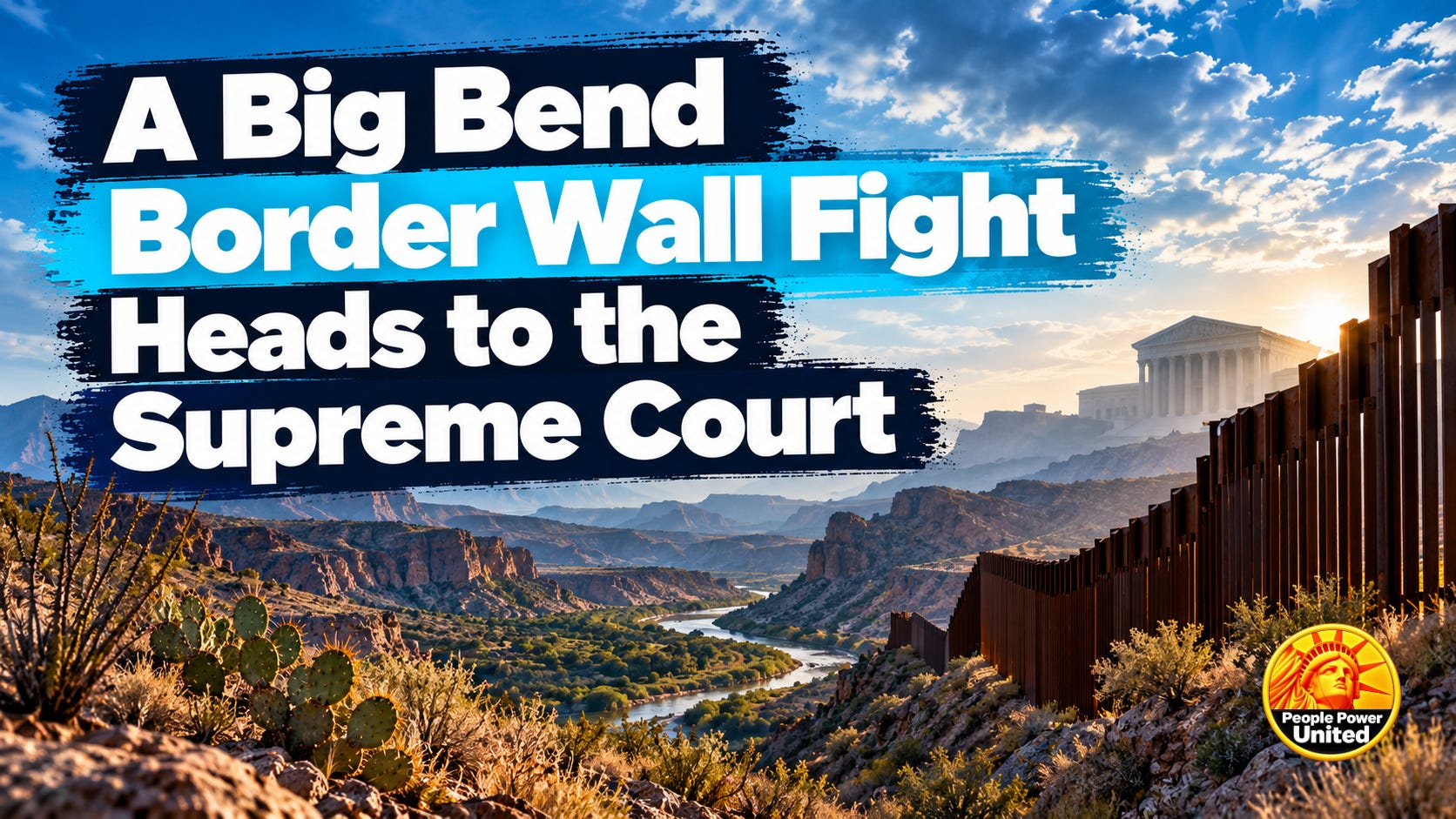
The administration has asked the Supreme Court to lift a lower-court injunction that paused border wall construction in the Big Bend region of Texas. A federal judge previously found that challengers were likely to succeed in arguing that the waivers used to bypass environmental laws exceeded the secretary’s authority.
The injunction covers construction in and around Big Bend National Park and nearby private and state lands. Supporters say a wall is necessary infrastructure. Opponents argue that the project would damage a fragile desert landscape and that alternatives like drones and surveillance towers could do the job with far less harm. Seattle Times
Why this matters: Once land is cleared and barriers go up, ecological damage is much harder to reverse than to prevent.
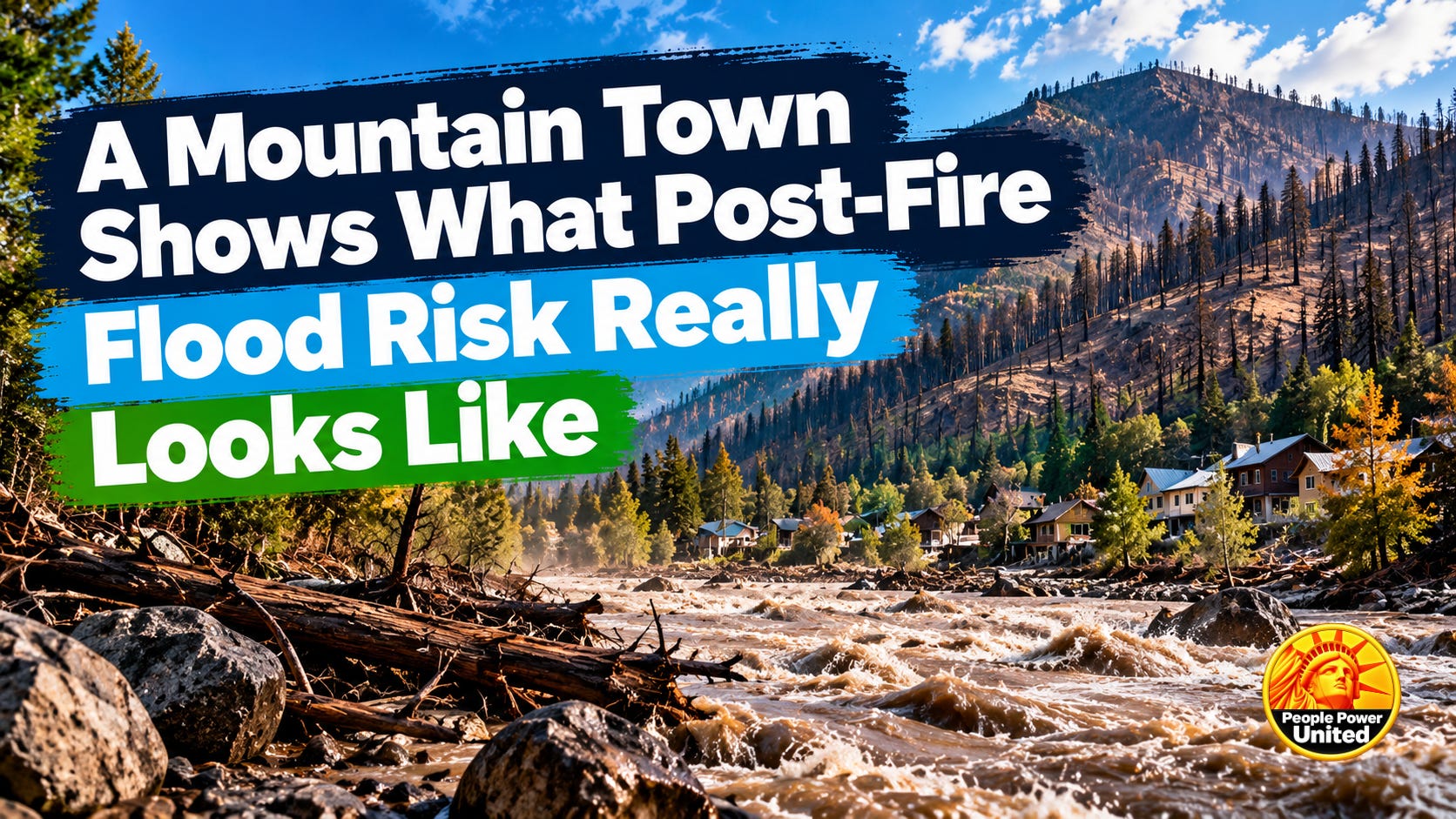
🌊 A Mountain Town Shows What Post-Fire Flood Risk Really Looks Like
New reporting from New Mexico revisits what happened after two 2024 wildfires burned 25,000 acres above Ruidoso. Experts warned that the damaged slopes could send dangerous flash floods into town. The fires and floods together destroyed about 1,000 homes. Still, local leaders returned to promoting tourism in 2025, even as flood modeling showed serious danger.
When flooding hit in July 2025, three people at an RV park died. First responders raised concerns about preparedness, while village leaders insisted they did all they could. ProPublica
Why this matters: Climate adaptation is not only about having forecasts. It is about whether communities act on them, especially when burned landscapes, rivers, and development collide.
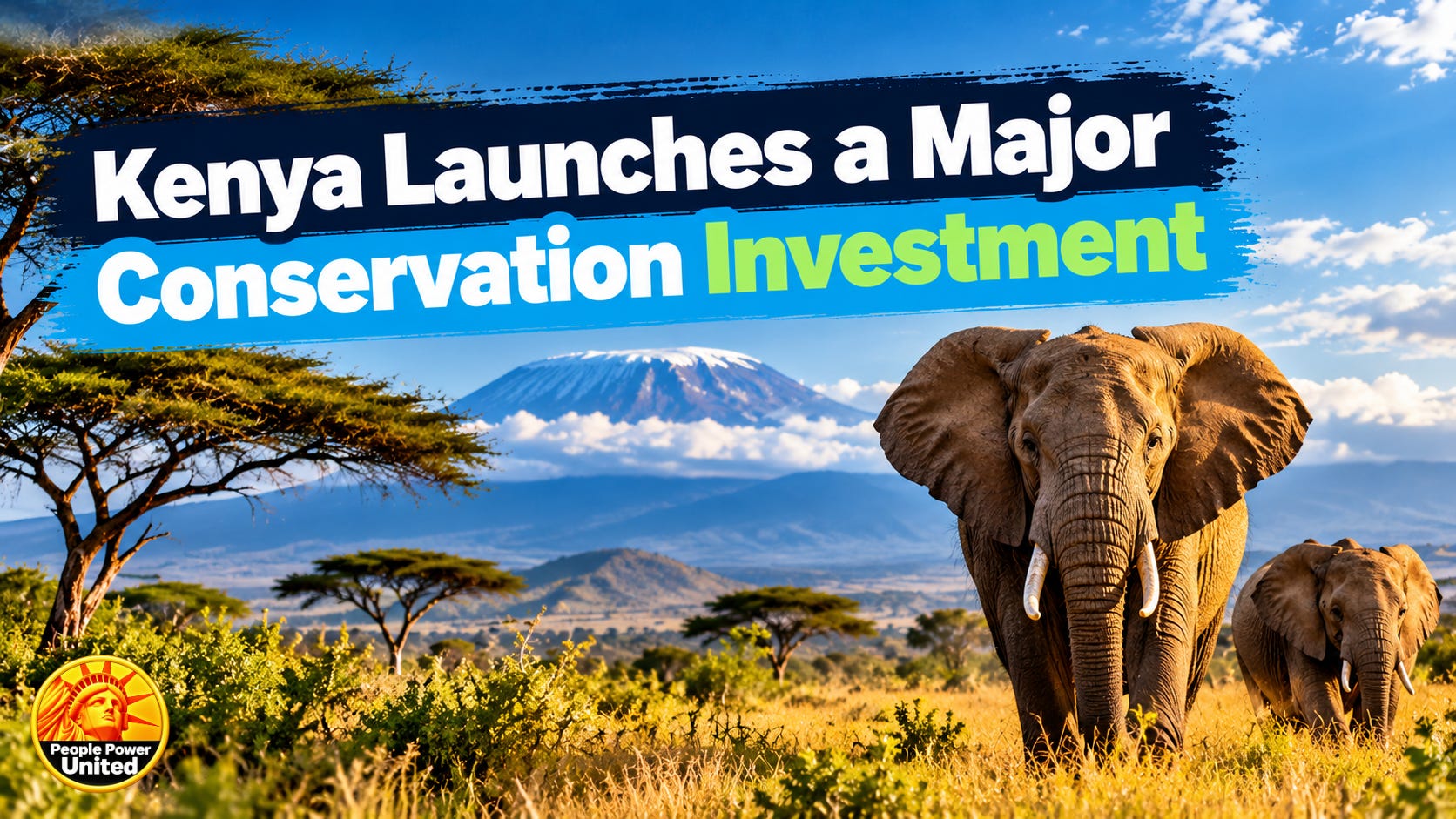
🐘 Kenya Launches a Major Conservation Investment
Kenya and a coalition of donors have signed a $160 million conservation program to protect 173,000 square kilometers of ecologically important land. The ten-year Thamani Asili initiative will combine $80 million from donors with a matching $80 million from the Kenyan government and tie funding to policy changes that improve land management.
The plan focuses on key biodiversity regions including the Great Rift Valley, Tsavo, and landscapes connected to the Maasai Mara and Serengeti. Officials say it is meant to protect wildlife while also supporting farmers and communities who share these lands. Bloomberg
Why this matters: Conservation lasts longer when it is funded for the long term and built with communities, not simply announced and forgotten.
💚 One Thing to Carry With You
I keep thinking about the difference between a warning and a decision.
A warning tells us what is coming. A decision tells us whether we will prepare, protect, and care for one another in time.
That is true for a border landscape, a burn-scarred mountain town, a wildlife corridor, and the atmosphere itself.
We do not control every storm, fire, or political choice. But we do control whether we learn, organize, and insist on better. The future is shaped by what we protect while it still counts. And it still counts now.
Laurie Woodward Garcia
Leader, People Power United
People Power United | In this community, we speak out, show up, and build power against racism, xenophobia, Islamophobia, antisemitism, homophobia, misogyny, sexism, ageism, ableism, sizeism, elitism, transphobia, misogynoir, and bigotry.